In search of the best AI humanizer? An AI humanizer is software that uses machine learning to help you get more done — it turns a rough idea into a polished result in seconds. When choosing one, weigh output quality, pricing, export formats, and how well it fits the tools you already use. Whether you are a beginner or a pro, the right AI humanizer slots into your workflow and pays for itself fast. We tested the leading options and ranked them by quality, value, and ease of use.
Joint constraints
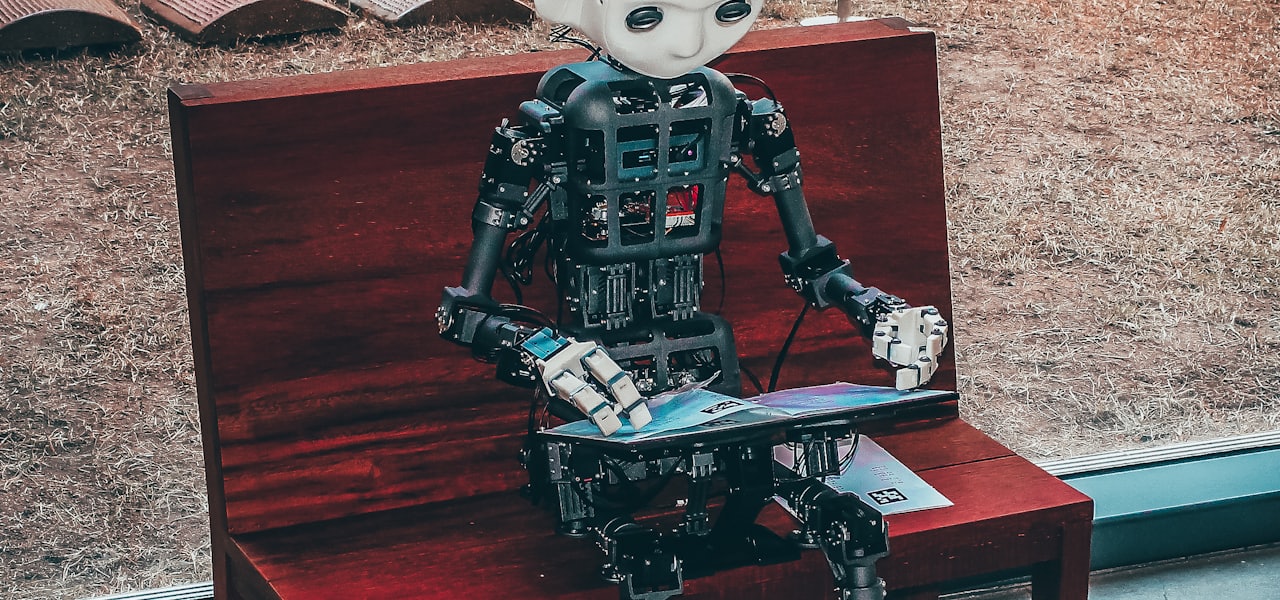
Joint constraints are rotational constraints on the joints of an artificial system. They are used in an inverse kinematics chain, in fields including 3D animation or robotics. Joint constraints can be implemented in a number of ways, but the most common method is to limit rotation about the X, Y and Z axis independently. An elbow, for instance, could be represented by limiting rotation on X and Z axis to 0 degrees, and constraining the Y-axis rotation to 130 degrees. To simulate joint constraints more accurately, dot-products can be used with an independent axis to repulse the child bones orientation from the unreachable axis. Limiting the orientation of the child bone to a border of vectors tangent to the surface of the joint, repulsing the child bone away from the border, can also be useful in the precise restriction of shoulder movement.
Language identification in the limit
Language identification in the limit is a formal model for inductive inference of formal languages, mainly by computers (see machine learning and induction of regular languages). It was introduced by E. Mark Gold in a technical report and a journal article with the same title. In this model, a teacher provides to a learner some presentation (i.e. a sequence of strings) of some formal language. The learning is seen as an infinite process. Each time the learner reads an element of the presentation, it should provide a representation (e.g. a formal grammar) for the language. Gold defines that a learner can identify in the limit a class of languages if, given any presentation of any language in the class, the learner will produce only a finite number of wrong representations, and then stick with the correct representation. However, the learner need not be able to announce its correctness; and the teacher might present a counterexample to any representation arbitrarily long after. Gold defined two types of presentations: Text (positive information): an enumeration of all strings the language consists of. Complete presentation (positive and negative information): an enumeration of all possible strings, each with a label indicating if the string belongs to the language or not. == Learnability == This model is an early attempt to formally capture the notion of learnability. Gold's journal article introduces for contrast the stronger models Finite identification (where the learner has to announce correctness after a finite number of steps), and Fixed-time identification (where correctness has to be reached after an apriori-specified number of steps). A weaker formal model of learnability is the Probably approximately correct learning (PAC) model, introduced by Leslie Valiant in 1984. == Examples == It is instructive to look at concrete examples (in the tables) of learning sessions the definition of identification in the limit speaks about. A fictitious session to learn a regular language L over the alphabet {a,b} from text presentation:In each step, the teacher gives a string belonging to L, and the learner answers a guess for L, encoded as a regular expression. In step 3, the learner's guess is not consistent with the strings seen so far; in step 4, the teacher gives a string repeatedly. After step 6, the learner sticks to the regular expression (ab+ba). If this happens to be a description of the language L the teacher has in mind, it is said that the learner has learned that language.If a computer program for the learner's role would exist that was able to successfully learn each regular language, that class of languages would be identifiable in the limit. Gold has shown that this is not the case. A particular learning algorithm always guessing L to be just the union of all strings seen so far:If L is a finite language, the learner will eventually guess it correctly, however, without being able to tell when. Although the guess didn't change during step 3 to 6, the learner couldn't be sure to be correct.Gold has shown that the class of finite languages is identifiable in the limit, however, this class is neither finitely nor fixed-time identifiable. Learning from complete presentation by telling:In each step, the teacher gives a string and tells whether it belongs to L (green) or not (red, struck-out). Each possible string is eventually classified in this way by the teacher. Learning from complete presentation by request:The learner gives a query string, the teacher tells whether it belongs to L (yes) or not (no); the learner then gives a guess for L, followed by the next query string. In this example, the learner happens to query in each step just the same string as given by the teacher in example 3.In general, Gold has shown that each language class identifiable in the request-presentation setting is also identifiable in the telling-presentation setting, since the learner, instead of querying a string, just needs to wait until it is eventually given by the teacher. == Gold's theorem == More formally, a language L {\displaystyle L} is a nonempty set, and its elements are called sentences. a language family is a set of languages. a language-learning environment E {\displaystyle E} for a language L {\displaystyle L} is a stream of sentences from L {\displaystyle L} , such that each sentence in L {\displaystyle L} appears at least once. a language learner is a function f {\displaystyle f} that sends a list of sentences to a language. This is interpreted as saying that, after seeing sentences a 1 , a 2 . . . , a n {\displaystyle a_{1},a_{2}...,a_{n}} in that order, the language learner guesses that the language that produces the sentences should be f ( a 1 , . . . , a n ) {\displaystyle f(a_{1},...,a_{n})} . Note that the learner is not obliged to be correct — it could very well guess a language that does not even contain a 1 , . . . , a n {\displaystyle a_{1},...,a_{n}} . a language learner f {\displaystyle f} learns a language L {\displaystyle L} in environment E = ( a 1 , a 2 , . . . ) {\displaystyle E=(a_{1},a_{2},...)} if the learner always guesses L {\displaystyle L} after seeing enough examples from the environment. a language learner f {\displaystyle f} learns a language L {\displaystyle L} if it learns L {\displaystyle L} in any environment E {\displaystyle E} for L {\displaystyle L} . a language family is learnable if there exists a language learner that can learn all languages in the family. Notes: In the context of Gold's theorem, sentences need only be distinguishable. They need not be anything in particular, such as finite strings (as usual in formal linguistics). Learnability is not a concept for individual languages. Any individual language L {\displaystyle L} could be learned by a trivial learner that always guesses L {\displaystyle L} . Learnability is not a concept for individual learners. A language family is learnable if, and only if, there exists some learner that can learn the family. It does not matter how well the learner performs for learning languages outside the family. Gold's theorem is easily bypassed if negative examples are allowed. In particular, the language family { L 1 , L 2 , . . . , L ∞ } {\displaystyle \{L_{1},L_{2},...,L_{\infty }\}} can be learned by a learner that always guesses L ∞ {\displaystyle L_{\infty }} until it receives the first negative example ¬ a n {\displaystyle \neg a_{n}} , where a n ∈ L n + 1 ∖ L n {\displaystyle a_{n}\in L_{n+1}\setminus L_{n}} , at which point it always guesses L n {\displaystyle L_{n}} . == Learnability characterization == Dana Angluin gave the characterizations of learnability from text (positive information) in a 1980 paper. If a learner is required to be effective, then an indexed class of recursive languages is learnable in the limit if there is an effective procedure that uniformly enumerates tell-tales for each language in the class (Condition 1). It is not hard to see that if an ideal learner (i.e., an arbitrary function) is allowed, then an indexed class of languages is learnable in the limit if each language in the class has a tell-tale (Condition 2). == Language classes learnable in the limit == The table shows which language classes are identifiable in the limit in which learning model. On the right-hand side, each language class is a superclass of all lower classes. Each learning model (i.e. type of presentation) can identify in the limit all classes below it. In particular, the class of finite languages is identifiable in the limit by text presentation (cf. Example 2 above), while the class of regular languages is not. Pattern Languages, introduced by Dana Angluin in another 1980 paper, are also identifiable by normal text presentation; they are omitted in the table, since they are above the singleton and below the primitive recursive language class, but incomparable to the classes in between. == Sufficient conditions for learnability == Condition 1 in Angluin's paper is not always easy to verify. Therefore, people come up with various sufficient conditions for the learnability of a language class. See also Induction of regular languages for learnable subclasses of regular languages. === Finite thickness === A class of languages has finite thickness if every non-empty set of strings is contained in at most finitely many languages of the class. This is exactly Condition 3 in Angluin's paper. Angluin showed that if a class of recursive languages has finite thickness, then it is learnable in the limit. A class with finite thickness certainly satisfies MEF-condition and MFF-condition; in other words, finite thickness implies M-finite thickness. === Finite elasticity === A class of languages is said to have finite elasticity if for every infinite sequence of strings s 0 , s 1 , . . . {\displaystyle s_{0},s_{1},...} and every infinite sequence of languages in the class L 1 , L 2 , . . . {\displaystyle L_{1},L_{2},...} , there exists a finite number n such
Constructing skill trees
Constructing skill trees (CST) is a hierarchical reinforcement learning algorithm which can build skill trees from a set of sample solution trajectories obtained from demonstration. CST uses an incremental MAP (maximum a posteriori) change point detection algorithm to segment each demonstration trajectory into skills and integrate the results into a skill tree. CST was introduced by George Konidaris, Scott Kuindersma, Andrew Barto and Roderic Grupen in 2010. == Algorithm == CST consists of mainly three parts;change point detection, alignment and merging. The main focus of CST is online change-point detection. The change-point detection algorithm is used to segment data into skills and uses the sum of discounted reward R t {\displaystyle R_{t}} as the target regression variable. Each skill is assigned an appropriate abstraction. A particle filter is used to control the computational complexity of CST. The change point detection algorithm is implemented as follows. The data for times t ∈ T {\displaystyle t\in T} and models Q with prior p ( q ∈ Q ) {\displaystyle p(q\in Q)} are given. The algorithm is assumed to be able to fit a segment from time j + 1 {\displaystyle j+1} to t using model q with the fit probability P ( j , t , q ) {\displaystyle P(j,t,q)_{}^{}} . A linear regression model with Gaussian noise is used to compute P ( j , t , q ) {\displaystyle P(j,t,q)} . The Gaussian noise prior has mean zero, and variance which follows I n v e r s e G a m m a ( v 2 , u 2 ) {\displaystyle \mathrm {InverseGamma} \left({\frac {v}{2}},{\frac {u}{2}}\right)} . The prior for each weight follows N o r m a l ( 0 , σ 2 δ ) {\displaystyle \mathrm {Normal} (0,\sigma ^{2}\delta )} . The fit probability P ( j , t , q ) {\displaystyle P(j,t,q)} is computed by the following equation. P ( j , t , q ) = π − n 2 δ m | ( A + D ) − 1 | 1 2 u v 2 ( y + u ) u + v 2 Γ ( n + v 2 ) Γ ( v 2 ) {\displaystyle P(j,t,q)={\frac {\pi ^{-{\frac {n}{2}}}}{\delta ^{m}}}\left|(A+D)^{-1}\right|^{\frac {1}{2}}{\frac {u^{\frac {v}{2}}}{(y+u)^{\frac {u+v}{2}}}}{\frac {\Gamma ({\frac {n+v}{2}})}{\Gamma ({\frac {v}{2}})}}} Then, CST compute the probability of the changepoint at time j with model q, P t ( j , q ) {\displaystyle P_{t}(j,q)} and P j MAP {\displaystyle P_{j}^{\text{MAP}}} using a Viterbi algorithm. P t ( j , q ) = ( 1 − G ( t − j − 1 ) ) P ( j , t , q ) p ( q ) P j MAP {\displaystyle P_{t}(j,q)=(1-G(t-j-1))P(j,t,q)p(q)P_{j}^{\text{MAP}}} P j MAP = max i , q P j ( i , q ) g ( j − i ) 1 − G ( j − i − 1 ) , ∀ j < t {\displaystyle P_{j}^{\text{MAP}}=\max _{i,q}{\frac {P_{j}(i,q)g(j-i)}{1-G(j-i-1)}},\forall j Fitness approximation aims to approximate the objective or fitness functions in evolutionary optimization by building up machine learning models based on data collected from numerical simulations or physical experiments. The machine learning models for fitness approximation are also known as meta-models or surrogates, and evolutionary optimization based on approximated fitness evaluations are also known as surrogate-assisted evolutionary approximation. Fitness approximation in evolutionary optimization can be seen as a sub-area of data-driven evolutionary optimization. == Approximate models in function optimization == === Motivation === In many real-world optimization problems including engineering problems, the number of fitness function evaluations needed to obtain a good solution dominates the optimization cost. In order to obtain efficient optimization algorithms, it is crucial to use prior information gained during the optimization process. Conceptually, a natural approach to utilizing the known prior information is building a model of the fitness function to assist in the selection of candidate solutions for evaluation. A variety of techniques for constructing such a model, often also referred to as surrogates, metamodels or approximation models – for computationally expensive optimization problems have been considered. === Approaches === Common approaches to constructing approximate models based on learning and interpolation from known fitness values of a small population include: Low-degree polynomials and regression models Fourier surrogate modeling Artificial neural networks including Multilayer perceptrons Radial basis function network Support vector machines Due to the limited number of training samples and high dimensionality encountered in engineering design optimization, constructing a globally valid approximate model remains difficult. As a result, evolutionary algorithms using such approximate fitness functions may converge to local optima. Therefore, it can be beneficial to selectively use the original fitness function together with the approximate model. Springpad was a free online application and web service that allowed its registered users to save, organize and share collected ideas and information. As users added content to their Springpad accounts, the application automatically identified and categorized it, then generated additional snippets based on the types of objects added—for example, listing price comparisons for products and showtimes for movies. Springpad was also available as apps on the iPad, iPhone and Android that synchronized with the Web interface. Springpad was bundled on new Toshiba notebook computers through a Web application subscription service. On May 23, 2014, Springpad announced that it would cease operations on June 25, 2014. The company then allowed users to export their data (as JSON and read-only HTML formats), or to automatically migrate it to Evernote accounts before the expiration date. == Features == Springpad users could use the main site interface which uses HTML5 from most browsers or use the smartphone app to capture notes, tasks, or lists which were then added to the user's "My Stuff", the user's personal database or collection. Additionally Springpad let users look up items of interest which were then automatically categorized based on type or manually categorized by the user. Category types included recipes, movies, products, restaurants and wine. Events could also be added to Springpad, and if the user used Google Calendar, they could opt to sync the event to it. In addition to the smartphone app and site, Springpad could be used via browser extension for Google Chrome, or the Springpad Clipper, a bookmarklet to analyze webpages and clip relevant information from them—for example, the ingredients needed for a recipe—or to add the site as a normal bookmark. Another way users could add content to their Springpad "My Stuff" was by emailing entries to an email address specified on Springpad registration. Springpad's smartphone apps could be used to scan barcodes to identify products, save them to the user's "My Stuff", and automatically generate additional product information and links. The mobile app could also save images taken with the phone's camera, and locate nearby businesses. With most of the content added to a user's "My Stuff", relevant news, useful links and other helpful information could be viewed. Users could also attach additional notes and images to content they had already saved, and could add reminders and alerts which could be emailed to the user or texted to their phone. Springpad also added alerts to its own Alerts section for relevant news, deals or coupons for specific products users added. For additional organization, anything added to Springpad could also be tagged. Users could also add entries to "Notebooks" to separate content by projects, or any other way they wished. Each Notebook included a section called a "Board", which acted as a pin board where users could "pin" content they'd added to the Notebook, allowing them to visually lay out items. If the user added a map to the Board and had entries that included an address, Springpad could automatically point out entries on the map. By default, everything added to Springpad was private. However users could change the privacy settings for each of the types of items added, decide to make specific items public and shareable on Facebook and Twitter, add them to their public page, or keep them private but links to them with specific people. In statistics, modes of variation are a continuously indexed set of vectors or functions that are centered at a mean and are used to depict the variation in a population or sample. Typically, variation patterns in the data can be decomposed in descending order of eigenvalues with the directions represented by the corresponding eigenvectors or eigenfunctions. Modes of variation provide a visualization of this decomposition and an efficient description of variation around the mean. Both in principal component analysis (PCA) and in functional principal component analysis (FPCA), modes of variation play an important role in visualizing and describing the variation in the data contributed by each eigencomponent. In real-world applications, the eigencomponents and associated modes of variation aid to interpret complex data, especially in exploratory data analysis (EDA). == Formulation == Modes of variation are a natural extension of PCA and FPCA. === Modes of variation in PCA === If a random vector X = ( X 1 , X 2 , ⋯ , X p ) T {\displaystyle \mathbf {X} =(X_{1},X_{2},\cdots ,X_{p})^{T}} has the mean vector μ p {\displaystyle {\boldsymbol {\mu }}_{p}} , and the covariance matrix Σ p × p {\displaystyle \mathbf {\Sigma } _{p\times p}} with eigenvalues λ 1 ≥ λ 2 ≥ ⋯ ≥ λ p ≥ 0 {\displaystyle \lambda _{1}\geq \lambda _{2}\geq \cdots \geq \lambda _{p}\geq 0} and corresponding orthonormal eigenvectors e 1 , e 2 , ⋯ , e p {\displaystyle \mathbf {e} _{1},\mathbf {e} _{2},\cdots ,\mathbf {e} _{p}} , by eigendecomposition of a real symmetric matrix, the covariance matrix Σ {\displaystyle \mathbf {\Sigma } } can be decomposed as Σ = Q Λ Q T , {\displaystyle \mathbf {\Sigma } =\mathbf {Q} \mathbf {\Lambda } \mathbf {Q} ^{T},} where Q {\displaystyle \mathbf {Q} } is an orthogonal matrix whose columns are the eigenvectors of Σ {\displaystyle \mathbf {\Sigma } } , and Λ {\displaystyle \mathbf {\Lambda } } is a diagonal matrix whose entries are the eigenvalues of Σ {\displaystyle \mathbf {\Sigma } } . By the Karhunen–Loève expansion for random vectors, one can express the centered random vector in the eigenbasis X − μ = ∑ k = 1 p ξ k e k , {\displaystyle \mathbf {X} -{\boldsymbol {\mu }}=\sum _{k=1}^{p}\xi _{k}\mathbf {e} _{k},} where ξ k = e k T ( X − μ ) {\displaystyle \xi _{k}=\mathbf {e} _{k}^{T}(\mathbf {X} -{\boldsymbol {\mu }})} is the principal component associated with the k {\displaystyle k} -th eigenvector e k {\displaystyle \mathbf {e} _{k}} , with the properties E ( ξ k ) = 0 , Var ( ξ k ) = λ k , {\displaystyle \operatorname {E} (\xi _{k})=0,\operatorname {Var} (\xi _{k})=\lambda _{k},} and E ( ξ k ξ l ) = 0 for l ≠ k . {\displaystyle \operatorname {E} (\xi _{k}\xi _{l})=0\ {\text{for}}\ l\neq k.} Then the k {\displaystyle k} -th mode of variation of X {\displaystyle \mathbf {X} } is the set of vectors, indexed by α {\displaystyle \alpha } , m k , α = μ ± α λ k e k , α ∈ [ − A , A ] , {\displaystyle \mathbf {m} _{k,\alpha }={\boldsymbol {\mu }}\pm \alpha {\sqrt {\lambda _{k}}}\mathbf {e} _{k},\alpha \in [-A,A],} where A {\displaystyle A} is typically selected as 2 or 3 {\displaystyle 2\ {\text{or}}\ 3} . === Modes of variation in FPCA === For a square-integrable random function X ( t ) , t ∈ T ⊂ R p {\displaystyle X(t),t\in {\mathcal {T}}\subset R^{p}} , where typically p = 1 {\displaystyle p=1} and T {\displaystyle {\mathcal {T}}} is an interval, denote the mean function by μ ( t ) = E ( X ( t ) ) {\displaystyle \mu (t)=\operatorname {E} (X(t))} , and the covariance function by G ( s , t ) = Cov ( X ( s ) , X ( t ) ) = ∑ k = 1 ∞ λ k φ k ( s ) φ k ( t ) , {\displaystyle G(s,t)=\operatorname {Cov} (X(s),X(t))=\sum _{k=1}^{\infty }\lambda _{k}\varphi _{k}(s)\varphi _{k}(t),} where λ 1 ≥ λ 2 ≥ ⋯ ≥ 0 {\displaystyle \lambda _{1}\geq \lambda _{2}\geq \cdots \geq 0} are the eigenvalues and { φ 1 , φ 2 , ⋯ } {\displaystyle \{\varphi _{1},\varphi _{2},\cdots \}} are the orthonormal eigenfunctions of the linear Hilbert–Schmidt operator G : L 2 ( T ) → L 2 ( T ) , G ( f ) = ∫ T G ( s , t ) f ( s ) d s . {\displaystyle G:L^{2}({\mathcal {T}})\rightarrow L^{2}({\mathcal {T}}),\,G(f)=\int _{\mathcal {T}}G(s,t)f(s)ds.} By the Karhunen–Loève theorem, one can express the centered function in the eigenbasis, X ( t ) − μ ( t ) = ∑ k = 1 ∞ ξ k φ k ( t ) , {\displaystyle X(t)-\mu (t)=\sum _{k=1}^{\infty }\xi _{k}\varphi _{k}(t),} where ξ k = ∫ T ( X ( t ) − μ ( t ) ) φ k ( t ) d t {\displaystyle \xi _{k}=\int _{\mathcal {T}}(X(t)-\mu (t))\varphi _{k}(t)dt} is the k {\displaystyle k} -th principal component with the properties E ( ξ k ) = 0 , Var ( ξ k ) = λ k , {\displaystyle \operatorname {E} (\xi _{k})=0,\operatorname {Var} (\xi _{k})=\lambda _{k},} and E ( ξ k ξ l ) = 0 for l ≠ k . {\displaystyle \operatorname {E} (\xi _{k}\xi _{l})=0{\text{ for }}l\neq k.} Then the k {\displaystyle k} -th mode of variation of X ( t ) {\displaystyle X(t)} is the set of functions, indexed by α {\displaystyle \alpha } , m k , α ( t ) = μ ( t ) ± α λ k φ k ( t ) , t ∈ T , α ∈ [ − A , A ] {\displaystyle m_{k,\alpha }(t)=\mu (t)\pm \alpha {\sqrt {\lambda _{k}}}\varphi _{k}(t),\ t\in {\mathcal {T}},\ \alpha \in [-A,A]} that are viewed simultaneously over the range of α {\displaystyle \alpha } , usually for A = 2 or 3 {\displaystyle A=2\ {\text{or}}\ 3} . == Estimation == The formulation above is derived from properties of the population. Estimation is needed in real-world applications. The key idea is to estimate mean and covariance. === Modes of variation in PCA === Suppose the data x 1 , x 2 , ⋯ , x n {\displaystyle \mathbf {x} _{1},\mathbf {x} _{2},\cdots ,\mathbf {x} _{n}} represent n {\displaystyle n} independent drawings from some p {\displaystyle p} -dimensional population X {\displaystyle \mathbf {X} } with mean vector μ {\displaystyle {\boldsymbol {\mu }}} and covariance matrix Σ {\displaystyle \mathbf {\Sigma } } . These data yield the sample mean vector x ¯ {\displaystyle {\overline {\mathbf {x} }}} , and the sample covariance matrix S {\displaystyle \mathbf {S} } with eigenvalue-eigenvector pairs ( λ ^ 1 , e ^ 1 ) , ( λ ^ 2 , e ^ 2 ) , ⋯ , ( λ ^ p , e ^ p ) {\displaystyle ({\hat {\lambda }}_{1},{\hat {\mathbf {e} }}_{1}),({\hat {\lambda }}_{2},{\hat {\mathbf {e} }}_{2}),\cdots ,({\hat {\lambda }}_{p},{\hat {\mathbf {e} }}_{p})} . Then the k {\displaystyle k} -th mode of variation of X {\displaystyle \mathbf {X} } can be estimated by m ^ k , α = x ¯ ± α λ ^ k e ^ k , α ∈ [ − A , A ] . {\displaystyle {\hat {\mathbf {m} }}_{k,\alpha }={\overline {\mathbf {x} }}\pm \alpha {\sqrt {{\hat {\lambda }}_{k}}}{\hat {\mathbf {e} }}_{k},\alpha \in [-A,A].} === Modes of variation in FPCA === Consider n {\displaystyle n} realizations X 1 ( t ) , X 2 ( t ) , ⋯ , X n ( t ) {\displaystyle X_{1}(t),X_{2}(t),\cdots ,X_{n}(t)} of a square-integrable random function X ( t ) , t ∈ T {\displaystyle X(t),t\in {\mathcal {T}}} with the mean function μ ( t ) = E ( X ( t ) ) {\displaystyle \mu (t)=\operatorname {E} (X(t))} and the covariance function G ( s , t ) = Cov ( X ( s ) , X ( t ) ) {\displaystyle G(s,t)=\operatorname {Cov} (X(s),X(t))} . Functional principal component analysis provides methods for the estimation of μ ( t ) {\displaystyle \mu (t)} and G ( s , t ) {\displaystyle G(s,t)} in detail, often involving point wise estimate and interpolation. Substituting estimates for the unknown quantities, the k {\displaystyle k} -th mode of variation of X ( t ) {\displaystyle X(t)} can be estimated by m ^ k , α ( t ) = μ ^ ( t ) ± α λ ^ k φ ^ k ( t ) , t ∈ T , α ∈ [ − A , A ] . {\displaystyle {\hat {m}}_{k,\alpha }(t)={\hat {\mu }}(t)\pm \alpha {\sqrt {{\hat {\lambda }}_{k}}}{\hat {\varphi }}_{k}(t),t\in {\mathcal {T}},\alpha \in [-A,A].} == Applications == Modes of variation are useful to visualize and describe the variation patterns in the data sorted by the eigenvalues. In real-world applications, modes of variation associated with eigencomponents allow to interpret complex data, such as the evolution of function traits and other infinite-dimensional data. To illustrate how modes of variation work in practice, two examples are shown in the graphs to the right, which display the first two modes of variation. The solid curve represents the sample mean function. The dashed, dot-dashed, and dotted curves correspond to modes of variation with α = ± 1 , ± 2 , {\displaystyle \alpha =\pm 1,\pm 2,} and ± 3 {\displaystyle \pm 3} , respectively. The first graph displays the first two modes of variation of female mortality data from 41 countries in 2003. The object of interest is log hazard function between ages 0 and 100 years. The first mode of variation suggests that the variation of female mortality is smaller for ages around 0 or 100, and larger for ages around 25. An appropriate and intuitive interpretation is that mortality around 25 is driven by accidental death, while around 0 or 100, mortality is related to congenital disease or natural death. Compared to female mortalityFitness approximation
Springpad
Modes of variation